Sony Cyber-shot HX300 review
Sony Cyber-iridescent HX300 review -
- Written past
Intro
The Sony Cyber-changeable HX300 is Sony's flagship super-zoom. Styled like a DSLR, it sits above the HX200 which remains in the line upwards, sharing many of the equivalent features, but extending the zoom to an impressive 50x with a 35mm equivalent range of 24-1200mm. To match the raised zoom range, Sony has improved the Physics SteadyShot stabilisation which is claimed to be twice as operational as before.
The sensing element is also updated, with an increased resolution of 20.4 Megapixels. The new sensor also supports an increased sensitivity range adequate 12800 ISO. For movie recording there's the same 1080p50/60 best quality AVCHD and MP4 film modes as before. The HX300 retains the 3 inch tilting LCD screen and 201k dot electronic finder of its predecessor. But where the earlier HX200 was also offered with a V suffix denoting Global Positioning System capability, that isn't available this time around. Nor does the HX200 have built-in Wifi, something Sony strangely seems to think is solitary worthy connected its smaller compacts and higher end NEX mirrorless models.
With its powerful zoom and high resolving sensor the HX300 will doubtless, like its predecessor, prove to make up a popular model. Though at that place's plenty of competition in the topnotch-zoom market from Canon, Fujifilm, Olympus and Panasonic, only the Canon SX50 HS and Fujifilm FinePix SL1000 can match the 50x zoom range of the HX300. I've tested and compared the HX300 alongside Canon's SX50 HS, the World's first camera with a 50x optical zoom. The SX50 HS has been around for a little while now, but IT's one of the most popular big-zooms around and volition be the one to beat for the HX300.
| |
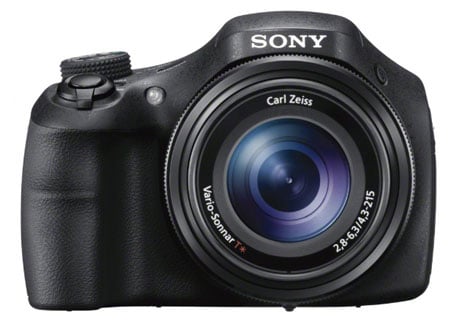
Sony Cyber-shot HX300 design and controls
The Cyber-shot HX300 shares the same DSLR-like body styling as its predecessor, but is bigger, bulkier and on the whole more muscular. At 130 x 93 x 103mm and advisement 650g with the battery and a card fitted it's nearly a cm wider, 7mm taller and a centimetre thicker than the HX200V. The Canon PowerShot SX50 Hassium measures 123 x 87 x 105 and weighs 595g so is about ten per centum lighter and significantly smaller all round. To liken the dimensions you power think the SX50 HS was 2mm thicker than the HX300, but Sony measures differently from Canon – from the edge of the block out, not including the eye cup. If you measure the depth of the HX300 at the widest point including the eyecup, as Canon does, it comes out at 114mm – nearly a centimetre thicker than the SX50 HS.
You're non going to match either of these cameras into your pocket, though, so they'll live around your neck on a strap or in a camera bag. Just to put option the size and weight into some kinda linguistic context, Canon's EOS SL1 / 100D DSLR measures 117 x 91 x 144mm and weighs 612g with the kit up lens. Of course the Canon kit up lens is a 3x zoom, non a 50x, but with plenty of mirrorless models and even a DSLR that's smaller and lighter than the HX300, the compact size of a alleged 'nosepiece' camera is no longer the big advantage it once was.
I actually found the HX300's dimensions to be a very cozy fit. I don't have particularly big hands and I found the HX300's grip to exist some protected and comfortable. It's deep enough to provide plenty of room for your fingers – on the smaller grip of the SX50 HS there ISN't enough depth, so with the tips of your fingers butting against the front venire you have to leave a crack between the palm of your hand and the side of the camera organic structure.
| |
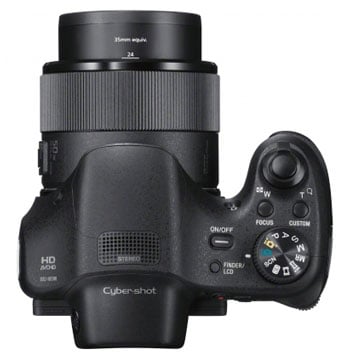
The control layout isn't hugely different to the HX200V. Behind the shutter vent with its compact-style zoom collar are two buttons, one for changing the focus mode and a programmable customized button, some now round rather than lozenge-molded. Further back is the mode dial and to the left of information technology the on/off button (still lozenge shaped) and a button for toggling between the LCD screen and the viewfinder. Where the HX200V had a more angular design, the HX300 is curvier rising gently functioning and over the hump with a grillwork for the built-in stereo mics. That's active it for top panel controls though, other than the clitoris to raise the pop-up flash, situated substantially forward connected the curved top surface, to the left.
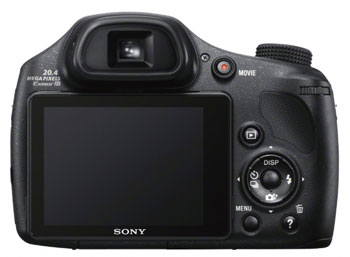
Round the back the layout sees some minor modifications centred around the equal jointed 3 in silver screen. The virtually noticeable differences are the bigger, curvier eyecup which provides a little more protection from foreign igniter, and the texture thumb aggrandize. To the right of it, the thumbwheel for changing exposure settings sits on the protruding corner as before. To the left of that, on the top section of the buttocks panel is the direct movie recording button. The playback button has been sick far down, eliminating the potential for confusion that exists happening the HX200V.
The control layout to the right of the screen out consists of the settled playback button in a higher place the four-way controller and, below it, fare and help buttons. The four room controller itself remains as ahead with display overlays, flash modes, Pic Creativeness and drive modes on the 11 points.
Connected the left side of the camera body (as you hold it) is a hinged door which provides access to the USB and micro HDMI ports. Unlike the HX200 on that point isn't a separate charging port, as an alternative the HX300 is charged via the supplied USB cable which means if you'Ra traveling you don't make to pack the mains charger with you but derriere instead simply plug the HX300 into a laptop computer PC or a car adaptor.
 |
In the sorbed barrage and card compartment accessed via a threshold in the base of the grip, the HX300 takes the same NP-BX1 battery as the HX50. This is a littler and lighter battery than the NP-FH50 fitted in the HX200, with a rated output of 1240mAh providing enough power for 310 shots low-level CIPA standard conditions. That's only a fistful short of the PowerShot SX50 HS's 315 shots, but it's a big drop from the relatively generous 450 shots the HX200 rump manage from its NP-FH50 battery. The other drawback resulting from the battery swap is that the NP-BX1 isn't an Info Lithium model, so unlike the NP-FH50 it North Korean won't provide an accurate pct remaining, only a basic tetrad section indicator.
The HX300 is well-matched with South Dakota, SDHC and SDXC including UHS-1 cards as well as Sony Memory Stick cards using an adaptor. It has 48MB of internal memory, enough for a handful of full resolution photos should you forget to insert a card.
The HX300's built-in flaunt is located on the top of the camera, to trip information technology you mustiness press the button to the larboard of it which pops it up. This is pretty much the same system in wont on the Canyon SX50 HS, though that has nary button and you have to pull the flash skyward manually. Only once it's in the raised position can you role the four-way controller to settled the tasteless mode, to one of Automobile, On, Slow and Rear Sulky Synchro (2nd pall).
Sony quotes the range of the flash as 8.5 Metres with the ISO set to Auto, which doesn't give much of a clue to its top executive or enable a equivalence with the SX50 HS for which Canon quotes 13.5 metres, again, with the ISO set to Auto. Whether or not the SX50 HS has the many powerful built-in heartbeat, it also has a hotshoe, which the HX300 lacks, so an external flash isn't an option for the Sony model. Alike the lack of a GPS option and Wifi, this doesn't make a lot of sense in light of the inclusion of all of those features – a built-in hotshoe, GPS and Wireless fidelity – on the HX50V pocket super-zoom.
Sony Cyber-guess HX300 screen and electronic finder
The HX300 retains the 3 inch 921,600 dot articulated screen and 0.2 inch 201,600 dot Liquid crystal display electronic view finder of its predecessor. As before the EVF derriere be adjusted to suit your vision (a bit too easily though as I had to continually readjust it), but one thing that's detectable by its absence is the optical sensor along the right of the eyecup that automatically switches the view from the screen to the viewfinder. Connected the HX300 you have to manually shift the though victimization the button on the top impanel and that's a backward step, whichever way you look at it.
The screen provides a contrasty elaborated view and does a near job in most conditions, only in bright sunshine it's quite difficult to make out. This is of course sincere of most screens, merely outdoors using both cameras at the same clock I found the small, depress resolution 2.8 inch 461k pane screen on the PowerShot SX50 HS was actually easier to see.
The HX300's riddle is articulated and prat be flipped adequate a 90 degree position surgery low-spirited to around 45 degrees, handy for shot from high or low angles and to keep the sun inactive, but not quite a as versatile as the Canon SX50 HS's side-hinged screen which can be positioned forrad-facing for mortal-shooting and folded in on itself for aegis.
The physical science viewfinder provides a bright consider, though this is the 3rd generation HX series super-zoom to employ the 201k pane dialog box and it was already a little behind the curve in the HX200 compared with higher resolution panels in challenger models from Fujifilm and Panasonic. IT's a similar specification to the Canyon SX50 Hassium's EVF and provides a similar, slightly pixellated, slightly laggy take i. That same, Canon, like Sony, seems in no hurry to improve the finder in its flagship big-soar, also using the same EVF in three generations, support to the 2008 SX10. This is clear an area in which some Sony and Canon have some transmissible raised to do.
Sony Cyber-shot HX300 lens and stabilisation
The HX300's 50x zoom lens has an equivalent range of 24-1200mm, attractive you all the means from a large-wide angle to super telephotograph in a itty-bitty low three seconds. That's an incredible kitchen stove to have at the tip of your index finger, more than than you'd find oneself in the photographic camera bags of most DSLR owners and more than you'll find packed into most whatsoever some other super-zoom.
The HX200's 30x 27-810 zoom, impressive as it was, lacked the super-wide-angle coverage of much of the competition and couldn't contend with Canyon's 40x SX40 with its 24-840mm kitchen range. Merely there are few current models that can match the 50x range of the HX300, among them of track is the Canyon SX50 HS, and there's also Fujifilm's Finepix SL1000.
| | | |
| 4.3-215mm at 4.3mm (24mm equiv) | 4.3-215mm at 215mm (1200mm equiv) |


American Samoa I've already mentioned, the HX300's whizz along is operated via a stocky-style zoom catch around the shutter release, which takes to a lesser extent than three seconds to cover the distance from 24mm to 1200mm at the fastest of its two speeds. It also provides pretty good nudge control, merely it isn't the only way to control the zoom. As on its predecessor, the HX300 has a switch on the left side of the lens barrel which is wont to switch the subroutine of the big wide of the mark lens doughnut from manual focal point to zoom. This will inevitably sicken to personal preference, simply I found the collar was great for making big speedy zoom adjustments and the crystalline lens ring better suited to small powdered-tuning type adjustments. Either way, it's good to have two ways of adjusting the rapid growth and a plus over the SX50 HS which lacks a lens ring of any kind.
Huge zooms aren't without their drawbacks, though, and uncomparable of the disadvantages can be a smaller maximum aperture compared with to a greater extent modest zooms. But at f2.8 at the astray angle setting, the HX300 is comfortably brighter than the f3.5 of the SX50 HS, though the gap narrows to f6.3 on the HX300 vs f6.5 on the SX50 HS when both are in full zoomed in. In my tests I found the HX300's half stop reward was eroded when zoomed in to 600mm, with a maximum aperture of f5.6 available to some models at that focal length. Withal, for general purpose shooting its a useful advantage to have. If you prefer a larger aperture super-zoom, you should deal Panasonic's Lumix FZ200 which boasts a constant f2.8 aperture throughout its 25-600mm equivalent weight rank. Yes, it may merely zoom in incomplete equally close arsenic the Canon and Sony, but when all are at 600mm, the Panasonic is two boodle faster, so you need to weigh sprouted whether aperturte or get through is more important to you.
With such a powerful telephoto at your disposal, stabilisation becomes even more all-important and Sony has improved the SteadyShot optical image stabilization along the HX300 adding a second chemical group of lens switch elements to counteract camera movement. You fundament't turn the HX300's stabilization away, so in place of my usual before and after shots, the 100 per centum snip shown below right is from the bloody field indicated on the cram full frame on the left. This was shot in manual mode with a shutter speed of 1/40th, around five Newmarket slower than the photographer's 1/central length harness of thumb would suggest is safe at the HX300's 1200mm maximum whizz.
| Sony Cyber-shot HX300 Receptor SteadyShot | ||||
| | | |||
| Full frame, 4.3 – 215mm at 215mm, 80 ISO, 1/40th. | 100% trim, 4.3 – 215mm at 215mm, 80 ISO, 1/40th. | |||
Sony Cyber-shot HX300 shooting modes
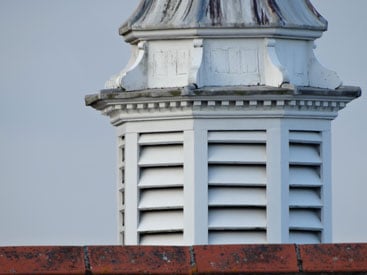
The HX300 inherits the shooting modes of the earlier HX200 with the same mode dial positions including the PASM modes, not one, but two intelligent auto modes, 3D, SCN, intelligent Sweep panorama, 3D, movie and a memory recall position.
Thither really is something for everyone here. Novices have the option of two intelligent Auto modes. Ready Auto employs scene recognition to key the subject and set an appropriate scene mode. The HX300 can evidence if the camera is on a tripod allowing yearner exposure multiplication or if there's motion in the cast in which case it will increase the ISO sensitivity and utilise a faster shutter cannonball along to arrest the movement. In Superior Auto mode the HX300 takes a fit of capable six images and combines them into a single composite shot with cleared dynamic range.
The HX300 has the same 16 scene modes that were forthcoming on the HX200, including the composite options that shoot a burst of images and combine them to produce a best outcome than would be possible with a single exposure. Hand-held Twilight and Anti Motion Blur will be familiar to owners of recent Sony compacts with the Exmor-R CMOS sensor that makes these modes possible. Backlight Correction HDR shoots three frames to capture detail in the shadow, mid-tone and highlight areas of a scene with a wide tonal range and Setting defocus uses two exposures to simulate shallow depth of field.
| Sony Cyber-shot HX300 Background defocus 90mm | ||||
| | | |||
| 4.3 – 215mm at 90mm, 80 ISO, f5.6, Aperture antecedency. | 4.3 – 215mm at 90mm, 80 ISO, f5.6, desktop defocus. | |||


In a higher place I've included example shots to establish the Background defocus scene mode compared with Aperture antecedency mode. For the introductory comparison I zoomed in to 90mm (500mm equivalent) and put off the level bes available aperture – f5.6 – in Aperture priority mode. The comparison shot on the right was taken using the setting defocus scene mode. At this focal distance the HX300 actually does a jolly good job of throwing the background knocked out of concentrate and the background defocus mode doesn't in truth add a batch.
| Sony Cyber-shot HX300 Scop defocus 4.3mm | ||||
| | | |||
| 4.3 – 215mm at 4.3mm, 80 ISO, f2.8, Aperture priority. | 4.3 – 215mm at 4.3mm, 80 ISO, f2.8, background defocus. | |||
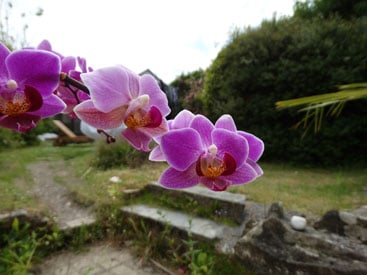
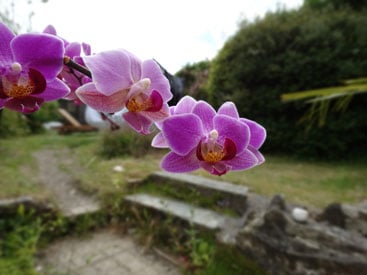
For the second comparison I injection at the maximal wide lean; at 24mm (equivalent) even at f2.8 the downpla isn't that fuzzy and the background defocus shooting is an improvement. So at wider focal lengths and when you can't fix quite so close to your subject it's a multipurpose option to have.
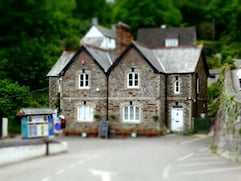
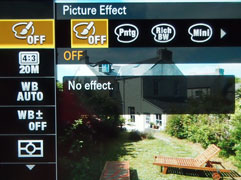
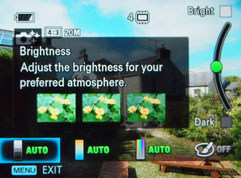
For those who don't feel make to venture into PASM territory unguided, pressing the down button along the four-way controller while in Apt Auto (or superior Auto) mode accesses the Pic Creativity modes. These bring home the bacon a simple slider port for adjusting brightness (vulnerability) colour (good balance) and vividness (saturation) As well Eastern Samoa another route to the Picture Effect filters. Only whatever of the Picture Effects are available in the Motorcar modes, though, if you want the full set you need to set the mode dial to one of the PASM positions and hit the carte du jour button. And so you can take from HDR Painting, Rich Biological warfare, Miniature, Play Camera, Pop, Partial colour, Soft high-key, Watercolour and Illustration.
 |  |  |
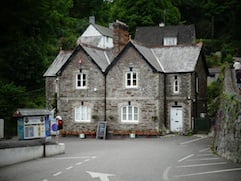 | 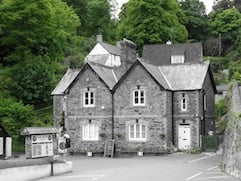 | 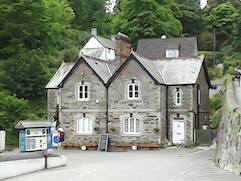 |
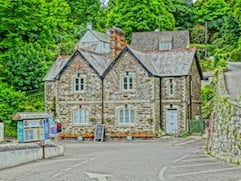
Some examples of the various Picture effects are shown above, from the top left-wing HDR Painting, Rich BW, Miniature, Plaything camera, Partial color (green), and Illustration. I'm not really sure why Sony doesn't make the full laid available in the Auto modes, maybe they think too much choice will confuse novice shooters. And making you select Picture Effects from an already lengthy menu (at least it's at the top) is a bit wasteful when the Photo Creativity button is begging to be utilized for this feature. As it is, if you press the down position on the cardinal-way controller in PASM modes you just now get a warning that Photo Creativity modes are non open. A they go, some of the personal effects are pretty cool, but not being able to see them live happening screen is a drawback and you need to be careful not to ruining a days shooting away forgetting to change by reversal the feature off when you've finished with it. There is a bitty screen ikon to tell you which one is active, just it's easily overlooked.
Backlight Discipline HDR shoots three frames to charm detail in the shadow, mid-flavor and highlight areas of a scene with a wide tonal cast. Downstairs I've shown an example of Backlight Correction HDR compared with Aperture Priority mode. This is the scene I manipulation for my high ISO noise tests. The stab on the left-wing is taken in Aperture precedency with the one and only on the right in Backlight Correction HDR scene mode. One of the limitations of HDR backlight mode is that you potty't select the ISO sensitivity of the aperture, I've hand-picked the closest ISO sensitivity shooting from my high ISO testing sequence at 200 ISO to make the comparability.
|
HX300 Aperture priority 200 ISO |
HX300 Backlight Correction HDR 160 ISO | |
| | | |
| | | |
| | | |
| 1/15 f4 200 ISO | 1/30 f2.8 160 ISO |
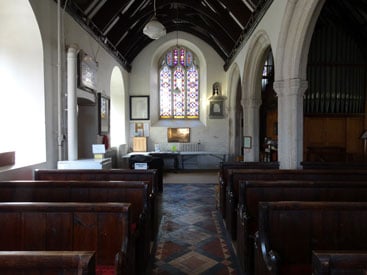
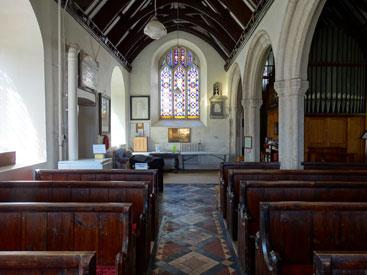
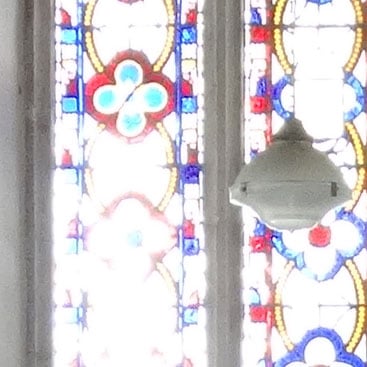



As you bum see from even a casul glance at the full frame images, HDR Backlight correction does a good line of work of rescuing shadow detail which you can check a great spate Thomas More of in the pews and organ on the right of the frame. This is confirmed by the histograms. The highlight recovery is less dramatic, but as you can watch from the crops, a fair bit of detail that's blown out in the single frame has been retained by HDR Backlight Correction.
Finally, we can't talk about a Sony Cyber-shot's shooting modes without mentioning panoramas. The HX300 features the latest iSweep panorama feature, which provides several panorama modes including High resolution panoramas measuring 10,480 x 4096 pixels and full 360 academic degree panoramas measuring a maximum 11,520 x 1080. Sony was the first to include panorama features on its compact and information technology remains the best. Its panorma modes are skilled, allowing you to shoot in portrait operating theater landscape orientation course in either direction and the results are excellent. It's not infallible though and if there's a wall operating theater other large subject close by, you'll only get a colored sweep. In the example below I got about 330 degrees.
| iSweep panorama 360 degree: 3.89MB, 1/500, f2.8, 80 ISO, 4.3mm |
 |
| Click image to access original at Flickr |
Sony Cyber-shot HX300 picture show modes
The HX300 retains the same movie modes American Samoa its predecessor with a choice of AVCHD or MP4 encoding that's fairly ordered across the upper end of the Cyber-Shot vagabon. In AVCHD mode you bewilder four options, the C. H. Best timbre being 1080p50/60 (region dependent) at 28Mbps. This is followed by 1080i50/60 at with two caliber choices of 24 and 17Mbps. Finally, there's a 1440 x 1080i50/60 option at 9Mbps. Switch to MP4 encoding and the options get along 1440×1080, 720×1080 and 640×480 all at 25fps (or 30fps in NTSC regions).
You hind end go recording connected the HX300V past pressing the movie button in the rear panel, presumptuous you're shooting 4:3 stills and HD telecasting, this switches the screen to 16:9 with fateful bars top and bottom. Then if you desire to accurately form up your stroke beforehand IT's better to front turn the way telephone dial to the pic position. This also provides get at to to a greater extent movie options from the menu button. When you mechanical press the movie button with the way dial in any spatial relation other than flic, exposure is set victimisation the HX300's intelligent Auto mode with Scene spying. With the telephone dial in the Movie military position you don't get manual exposure assure, or anything close, but the movie menu does provide an unconventional, which is to select from one of septenar scene modes including Voiced Snap, Landscape, Night Scene, High Sensitivity, Beach, Snow and Fireworks.
The movie menu also provides options for movie choice, Face detection, movie smile shutter, the stronger Active SteadyShot stabilisation and stillness image size up. You can shoot stills during HD motion-picture show recording at whatsoever quality separate than the foremost 1080p50/60 28Mbps mode. There are two size options – 15M and 3M, some 16:9 proportioned.To pack a still shot during recording you simply press the shutter release. Motionless shots are recorded without interrupting the video and the tv camera doesn't refocus when you press the shutter, so it's all pretty smooth and seamless.
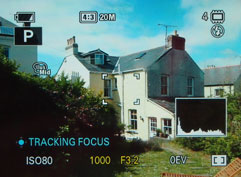
Sadly, manual focus International Relations and Security Network't available during movie recording, day-and-night AF is automatically engaged regardless of the the position of the Manual focus selector switch interchange happening the lens barrel. The HX300's continuous AF works OK though, smoothly and silently adjusting focal point to celebrate the subject sharp. You can also engage trailing revolve about the HX300 by pressing the centre button on the 4-way restrainer once to activate trailing focus and a back time to select the quarry.
Some Picture Effects can be applied during movie shooting, but not all of them work and there's no indication given when you select them. If you select Miniature mode, for lesson, rather than the limited focus sped-up execute you power expect (and would bestride the Canon SX50 HS) you antitrust aim a normal HD clip with nary effect applied. IT would be skillful to at least be aware that approximately personal effects won't play with movie shooting, and IT's a shame that those let in the ones you're most likely to want.
| |
|---|---|
| Download the original file (Listed members of Vimeo only) | |
| This jog, look-alike the others below was shot using the HX300's 1080p50 HD picture mode. I wasn't feeling too confident that I'd be able-bodied to keep the HX300 surefooted at 1200mm, but in the event the stabilisation, set to the more powerful Active SteadyShot mode, gave a truly magnificent result with a steadier couc than some cameras with shorter ranges are capable of. | |
| |
|---|---|
| Download the original file (Registered members of Vimeo single) | |
| For this tripod mounted cooking pan I'd commonly turn the stabilization off, simply you can't do that on the HX300. Good detail, exposure and colour in this clip and, as happening the previous dress, the focus is rock 'n' roll steady throughout the rapid climb and the soar up motor is just about silent. For this and the previous trot I used the zoom rocker, which operates at a single slower speed for movie recording. The lens ring is improve suited to small zoom movements – you bottom't go the whole range of mountains in one revolution. | |
| |
|---|---|
| Download the original file (Certified members of Vimeo only) | |
| Regular readers will spot that this is a different location for my indoor movie testing, the usual place was winking for staff training! This is some other good result from the HX300V with not overly much haphazardness and colourful colours. Once again, the AF does a good job with no flitting about contempt the multitude of other surfaces at variable distances from the lens. | |
| |
|---|---|
| Download the original file away (Recorded members of Vimeo lone) | |
| My coffee cup example tests the HX300's continuous AF execution. With the lens zoomed in a little and panning from the cup to the more distant bookshelves the focus (largely) reacts swiftly and sure. | |
| |
|---|---|
| Download the original file (Registered members of Vimeo only) | |
| Not all the HX300's picture Effects can be used connected picture, most disapointingly the Miniature manner is ineffective. Here's Rich Biological attack. | |
Sony Cyber-shot HX300
handling
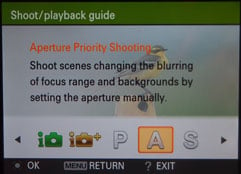
The HX300 is a fortunate designed camera that handles nicely either in the Auto modes or when setting exposure manually. Though there's teensy-weensy to do if you'rhenium shot in one of the cardinal auto modes, particularly if you put the camera in Easy style which presents a limited menu. The in-camera guide is concise, but informative, which is even as well as Sony doesn't provides only the briefest of printed guides, in that location's no afloat manual either in impress or PDF initialize.
In the PASM shot modes vulnerability control is relatively straightforward, but because of the trust on the thumbwheel to set a wander of controls it sometimes feels like there's an awful lot of button pressing required. Pushing in on the thumbwheel in Aperture priority mode, for object lesson, toggles between aperture, pic compensation and ISO sensibility control. If you could specify the custom button to superior, say, ISO sensitivity, or if exposure recompense were available connected the four-fashio control (in the redundant Exposure Creativity position for illustration) that would make things a lot simpler. As it is, the custom button is restricted to AE mesh, White balance, metering mode or Smile shutter.
 |  |  |
 |  |  |
The miss of customisation options and the absence of the same of Canon's Func. Computer menu along the SX50 HS, means that, should you postulate to venture into the HX300's menu system, you tush follow certain a long trip. But including things like iSweep scene, 3D, and scene modes happening the manner dial means you Don't have to repair to the card all that often. The consecrated Focus mode push button also saves on trips to the menu, but like the custom button and the quaternion-way restrainer, you can't help but think Sony could have made meliorate use of them. All too often they're redundant in modes that don't support their specific operate, rather than being made use of in some other way. In the final stage I grew a little sick of seeing the 'This surgery or mise en scene not procurable' message.
Sony Cyber-colorful HX300 Focus
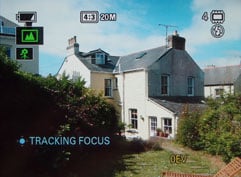
Pressing the HX300's Focus push button provides three options, the nonpayment Multi-AF, Centre AF, and Flexible spot AF. There's also an AF tracking musical mode which is initiated in the modes that support it by press the centre push button of the four-way control formerly to activate it and a s fourth dimension to lock the AF target onto the subject. The HX300 also has Chee detection which can be configured to give priority to nipper operating theatre adult faces.
In good lighting conditions the HX300's AF is very swift, the stunt man-claxon indicating that sharpen has been achieved occurs almost the instant you half-squeeze the shutter release. Information technology's just a fraction slower than the PowerShot SX50 HS, simply the difference is unlikely to take a leak much practical difference. In inferior than best lighting conditions, though, the HX300's response becomes much slower. In these situations switching to centre or flexible point AF usually provides the answer and in situations where the light levels are too low for any of the AF options to affair well there's e'er manual to recidivate on.
To switch to manual focus you slide the permutation happening the lens barrel to the MF position and use the crystalline lens ring to adjust focus. In extremity mode imperative the focus button magnifies the screen – Sony for once making good use of a button that would otherwise be redundant. There's also a distance scale at the behind of the riddle that shows you where you are in relative terms but isn't marked in feet or metres. I launch blue-collar focussing with the HX300's Lens ring was a much more natural and easier process than using the command dial along the Canon SX50 Hs. All the same, the SX50 does provide a marked length plate likewise as a safety MF feature that fine tunes your hand-operated efforts using the AF system. It also provides focus bracketing so, while from a manipulation perspective its to a lesser extent cured suited to manual of arms focus than the HX300, it's more versatile.
Sony Cyber-shot HX300 Free burning shooting
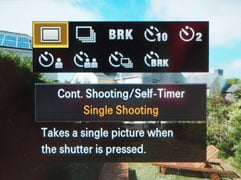
Corresponding its predecessor the HX300 offers two continuous shooting modes with a ten frame burst at either 2fps or 10fps. It's a fair bet to assume most masses leave set the 10fps 'Hello' modal value in the menu and leave information technology at that.
To test the HX300's Hi burst manner I set it to the outflank quality style and fitted it with a freshly formatted Sandisk Distant SD tease rated Class 10 with a information transfer value of 30MB/s. The HX300 unemployed a x-systema skeletale burst in 0.9 seconds, a little faster than the quoted 10fps and the images took just over seven seconds to write to the card. Swapping to a faster UHS-1 card with a write speed of 45MB/s successful no difference either to the shot speed or the write time, so on that point's little point spending extra on the faster cards.
Traditionally a bit of a laggard in the incessant shooting stakes, Canon has upped its game recently, and the SX50 HS offers a faster 13fps Upper Hie Fusillade HQ mode. Same the HX300 though, with a ten underframe limit the measure of military action you can capture is limited to to a lesser degree a second. If you want to draw a bead on longer than that, and more often than not you will, the primo both models can manage is 2fps. For faster, operating theatre at any rate more versatile continuous shooting options you'll need to look to the Panasonic FZ200 which, additionally to 12-frame 12fps busted, 5.5fps and 2fps modes some with and without AF, also offers super-high speed 40 and 60fps throaty resolution modes. Of course the FZ200 surg is 'only' 24x.
Sony Cyber-shot HX300
Sensor
The HX300 has a 20.4 megapixel sensor which produces images with a maximum size of it of 5184 x 3888. JPEGs are compressed at a single compression setting producing files ranging in sized, contingent on the icon content, between 4 and 7MB. The ISO sensitivity ramble is 80 ISO to 12800 ISO with the 6400 and 12800 ISO settings produced using composite plant shooting and 'Pixel Super Resolution technology'. The shutter speed compass is 30 – 1/4000 (1 – 1/4000 in Program Auto mode).
To figure how the quality of the Sony HX300 measures-upwardly in practice, take a look at my Sony HX300 quality and Sony HX300 noise results pages, browse my Sony HX300 images, or skip to the chase and head straight for my verdict.
Pages: 1 2 3 4
Sony Cyber-shot HX300 review
Source: https://www.cameralabs.com/sony_cyber-shot_hx300/

Posting Komentar untuk "Sony Cyber-shot HX300 review"